Volumetric Modular Construction: Predictable Outcomes, Reduced Timelines
Volumetric modular construction is no longer a niche approach. It has become a dependable method for reducing project timelines and delivering consistent, predictable results across a variety of sectors. The advantage comes from how the work is structured.
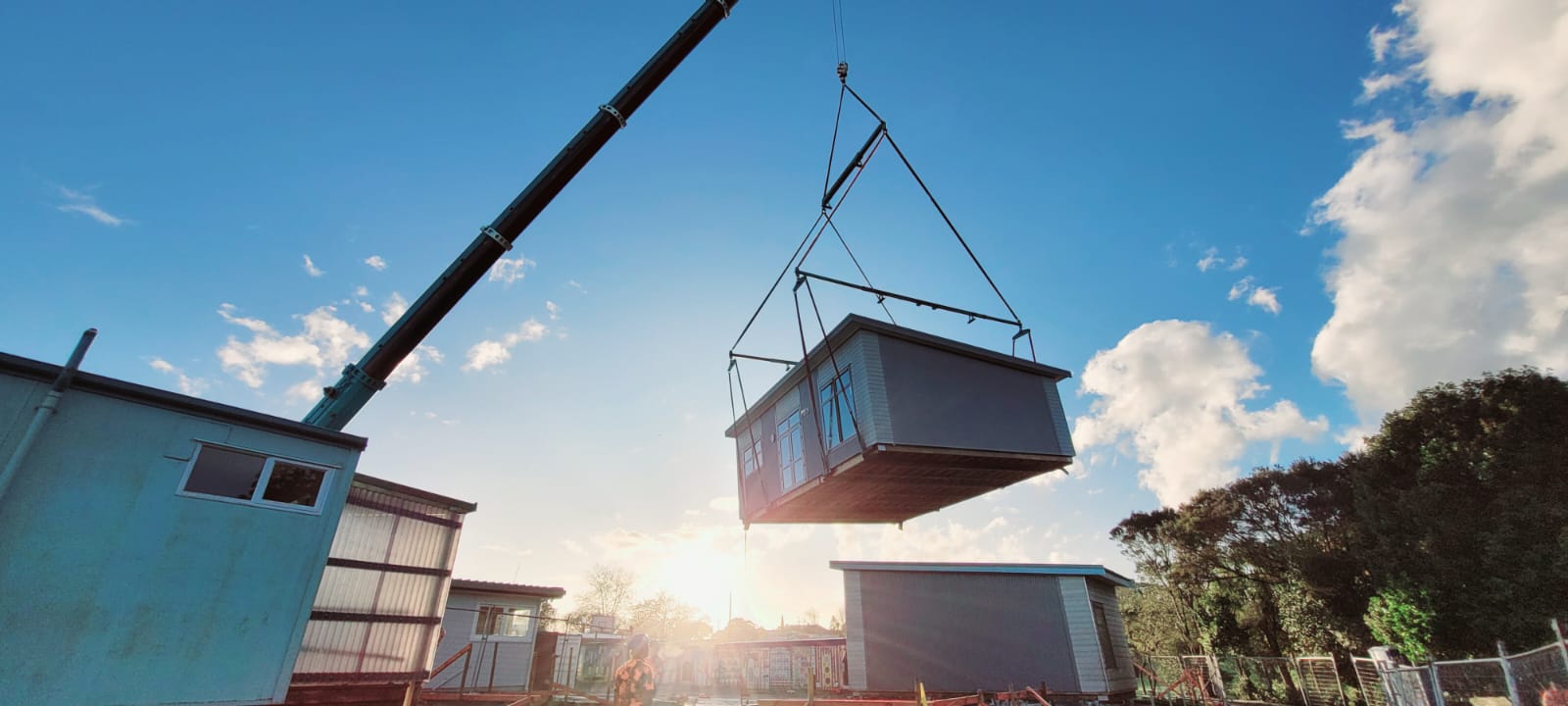
Instead of completing each stage on-site in sequence, volumetric construction allows you to manufacture the building offsite in a factory while the on-site works begin. Modules are built as structural units, with framing, linings, services, and finishes installed during fabrication. While this happens, the site team progresses piling and installing services and prepping the site for the delivery. Running these works in parallel is the main reason modular reduces build programmes.
By overlapping on-site work with off-site factory manufacturing, projects can often be completed 20–50% faster, with highly prefabricated projects achieving even greater reductions. These savings come from superior job flow, limited weather disruptions, and fewer interruptions in the flow of workers and materials.
Factory conditions also support speed. Work happens indoors, and modules leave the yard with building consents already granted, consistent tooling, and predictable sequencing. This approach typically reduces rework and keeps the programme moving. Some operators report up to 90% waste reduction, due to controlled cutting and material handling.
Another factor behind more efficient delivery is the level of completion the modules reach before they leave the factory. In many cases, internal walls, services, insulation, acoustic linings and finishes are already in place. Once on-site, the remaining work involves installation, service connections, and external integration to ensure weathertightness. With fewer trades needing to be onsite, programmes move faster, and the overall footprint shrinks. Fewer people to vet, fewer carparks needed, and less disruption for environments like schools and courts.
A recent example is A-Line’s Whenuapai School delivered for the Ministry of Education. While the site team carried out earthworks, foundations and service preparation, A-Line’s factory completed the full suite of modules in parallel with the buildings arriving onsite with, linings, services installation and internal complete. Once transported to site, the modules were installed and connected in a compressed timeframe, allowing the overall programme to be significantly shorter than a traditional on-site approach would allow. Delivering 14 classrooms, an admin block, a library, three amenities’ blocks, a caretakers shed, and a special needs block in just13 months. This project highlighted how off-site construction allows work to progress regardless of weather or subcontractor schedules.
When 60–90% of the build occurs in a controlled environment, timelines become more predictable. Crane days, deliveries, commissioning and sequencing can all be planned with greater accuracy because fewer elements are exposed to variables outside your control.
Volumetric modular construction doesn’t replace the need for strong project management, it changes where the coordination effort is placed. Early design clarity, clear interfaces and disciplined planning between factory and site teams are what unlock the time savings. Once those are in place, the efficiencies are consistent.
As demand grows for shorter programmes and fewer site risks, volumetric construction provides a proven pathway. When used on the right projects, it delivers earlier completion, stable scheduling and reliable quality; outcomes that matter to clients, contractors and end users alike.